
WHAT RISK MANAGEMENT (RM) IS:
Before we discuss RM, let’s focus what “risk” is. Britannica Dictionary definition of RISK is the possibility that something bad or unpleasant (such as an injury or a loss) will happen. The graphic below recognizes the overlap of the risks in the design professions and construction industry.
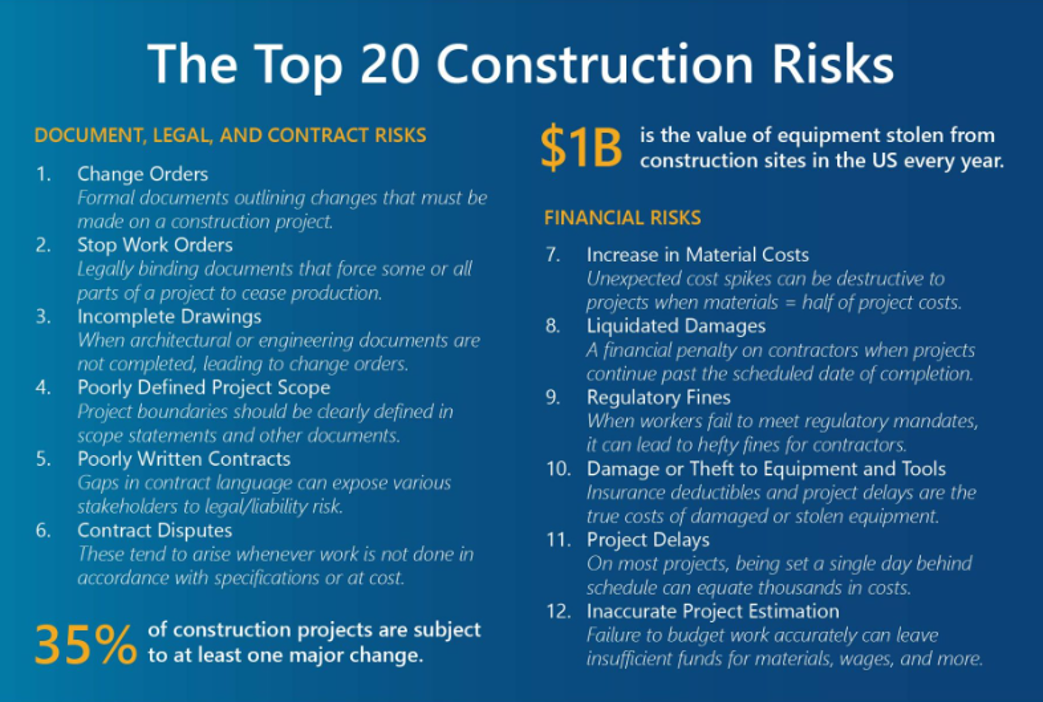
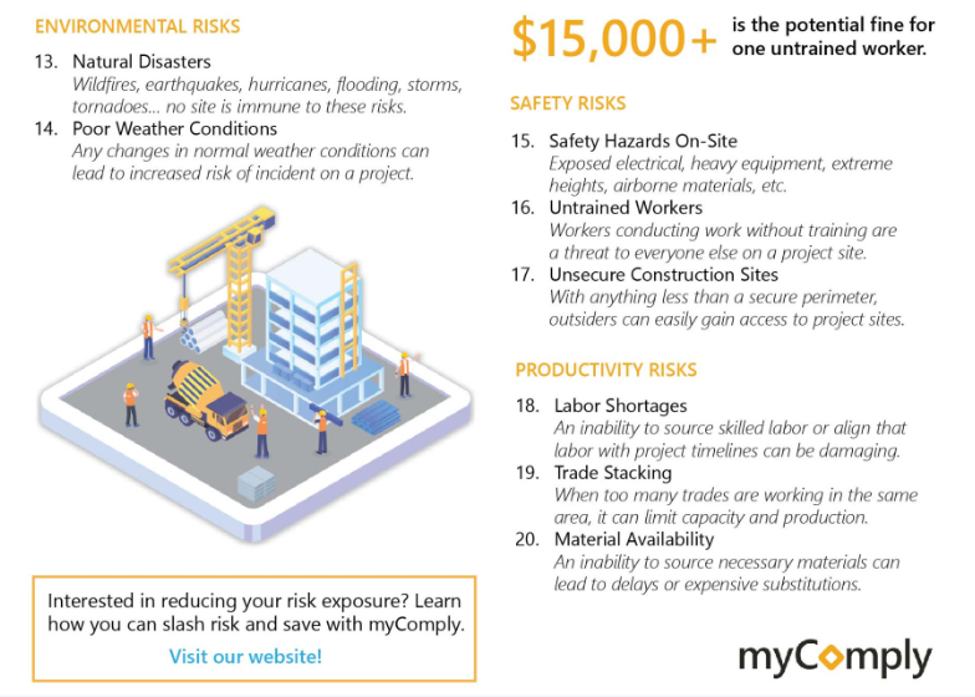
https://mycomply.net/info/blog/20-construction-risks/
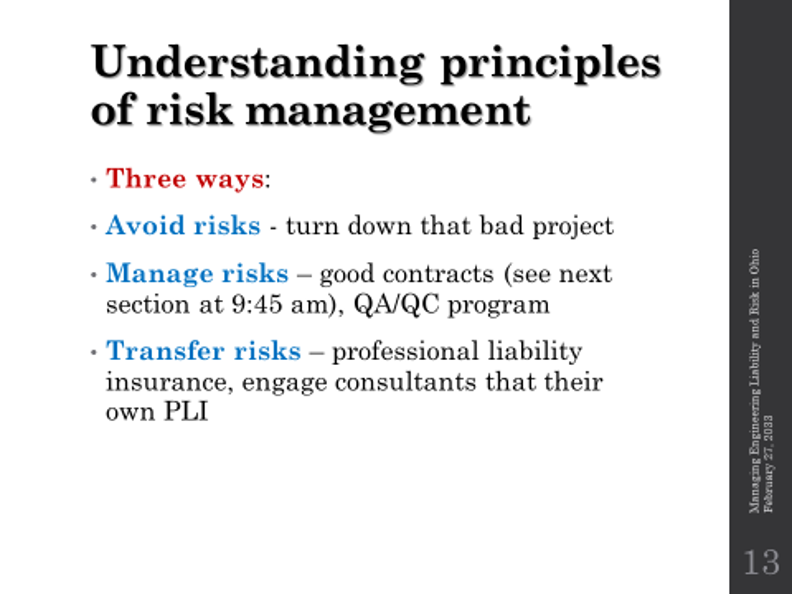
HOW TO MANAGE YOUR RISK
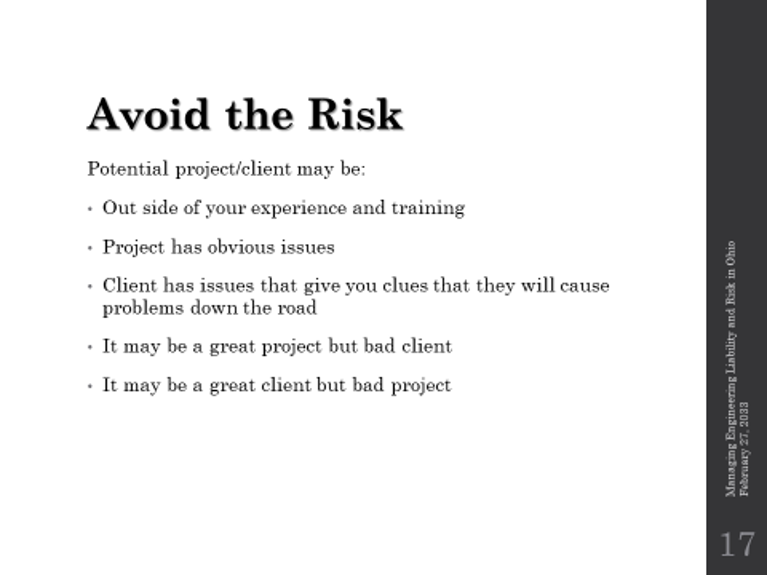
There are three recognized approaches to manage risks in the design professions and construction industry. These PowerPoint slides from one of my recent risk management presentations illustrate the approaches.
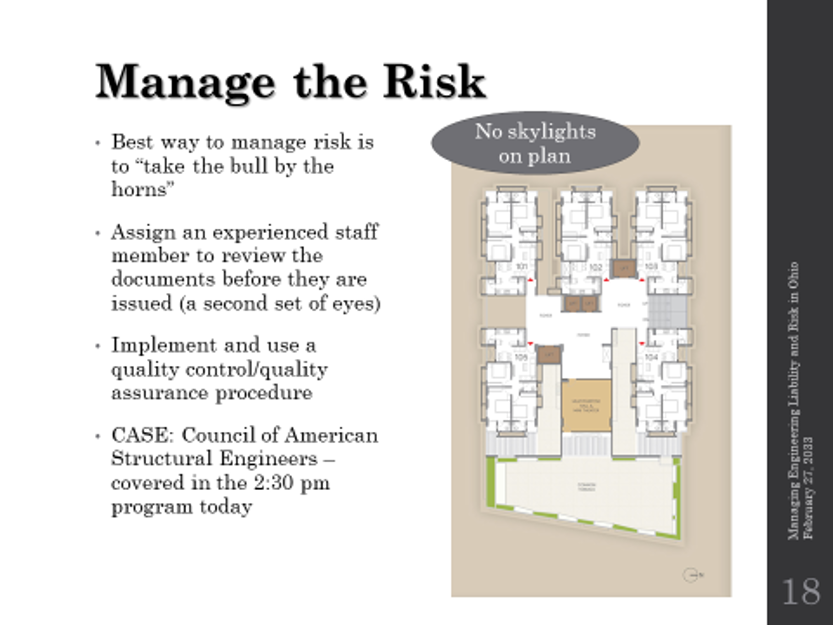
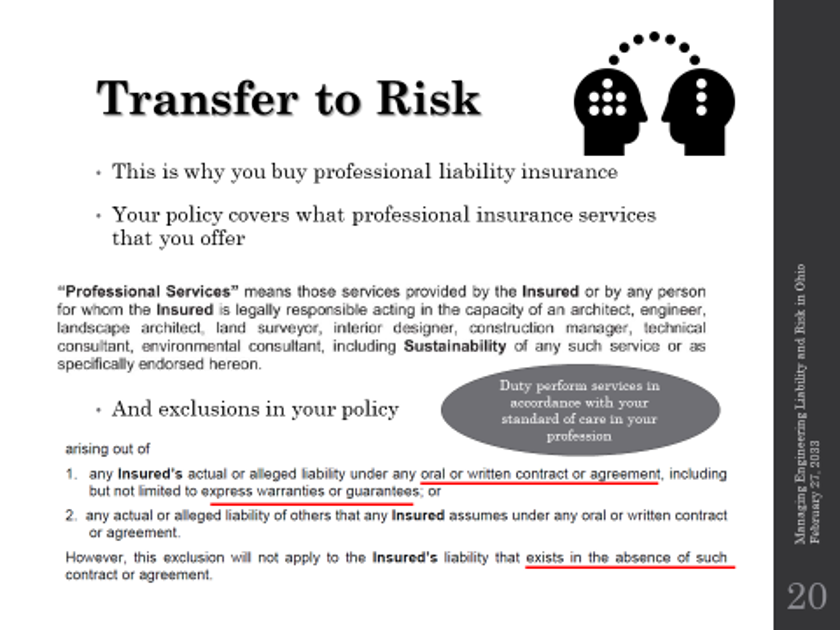
SUMMARY
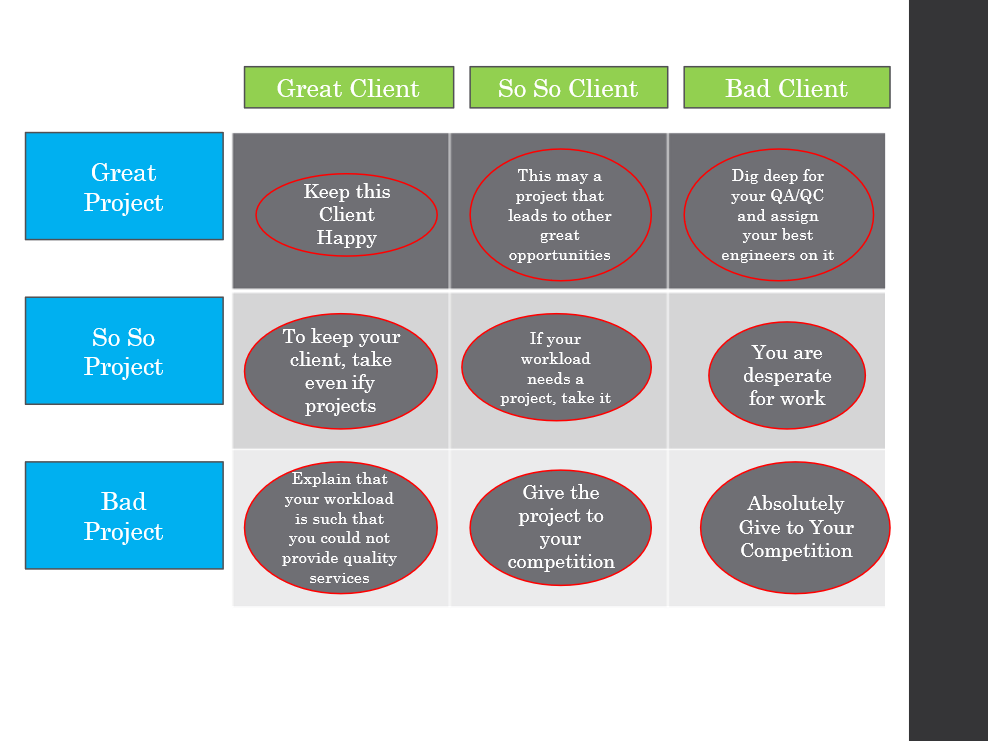
Once an architect or engineer (A/E) has determined what risks are involved in a project, and how to manage them, the last question is “What is the A/E’s risk tolerance?” In other words, an A/E must determine the associated risks knowing that they may have not eliminated all the pitfalls in a particular project. At that point, given what the A/E has learned from their risk manager, it is a business decision whether to move forward with the project. The risk manager cannot make the business decision for the A/E. One way to determine if a project or the potential client is too risky, and is a deal breaker, the following matrix can be helpful.
About the Author of this Risk Management Building Block Article
Eric O. Pempus, FAIA, Esq., NCARB has been a risk manager for more than 17 years with experience in architecture, law and professional liability insurance, and a unique and well-rounded background in the construction industry. He has 25 prior years of experience in the practice of architecture/engineering, and as an adjunct professor teaching professional practice courses at the undergraduate and graduate levels for the last 35 years. As a Fellow of the American Institute of Architects and AIA National Ethics Council 2021 Chair, he has demonstrated his impact on architectural profession. He has presented numerous loss prevention and continuing educational programs to design professionals and architectural students in various venues across the United States and Canada.
The above comments are based upon DesignPro Insurance Group’s experience with Risk Management Loss Prevention activities and should not be construed to represent a determination of legal issues but are offered for general guidance with respect to your own risk management and loss prevention. The above comments do not replace your need for you to rely on your counsel for advice and a legal review, since every project and circumstance differs from every other set of facts.
Disclaimer: The viewpoints expressed in this article are those of the author(s) and are not necessarily approved by, reflective of or edited by other individuals, groups, or institutions. This article is an expression by the author(s) to generate discussion and interest in this topic.