
It is common when providing professional design services that architects and engineers engage consultants to complete and deliver their scope of work to their clients, the project owners. Even the largest architectural/ engineering (A/E) firms engage consultants, especially when their projects’ scope of work are complex. And, pursuing certain projects may require specific strategic alliances with consultants for unique projects. Just to name a few, as this is not an exhaustive list—consulting services for acoustical engineering, landscape architecture, civil engineering, surveying, interior design, aquatic design, monumental stair design, elevators/escalators, environmental engineering, food/kitchen design, etc.
HERE ARE SOME, BUT CERTAINLY NOT ALL, CONSIDERATIONS WHEN A PRIME PROFESSIONAL ENGAGES CONSULTANTS
Why hire consultants in the first? Consultants bring to the design team the needed professional experience to provide the scope of the services for a particular project. Consultants (in almost instances) bring their professional liability insurance coverage to the exposure of risks inherent in every project. Since A/Es, as prime professionals are vicariously liable, they must confirm that their consultants have professional liability insurance the same or similar to their own. The Latin doctrine “Respondeat Superior” translates to “let the master answer.” Thus, prime professionals would require that their consultants share in risks on a project, otherwise the prime professional is “left holding the bag.”
The American Institute of Architects (AIA) 2020 Code of Ethics & Professional Responsibility, Rule of Conduct 3.10, 2 states that:
- Members shall undertake to perform professional services only when they, together with those whom they may engage as consultants, are qualified by education, training, or experience in the specific technical areas involved.
- Commentary to the Rule of Code: This rule is meant to ensure that Members not undertake projects that are beyond their professional capacity. Members venturing into areas that require expertise they do not possess may obtain that expertise by additional education, training, or through the retention of consultants with the necessary expertise.
The National Society of Professional Engineers (NSPE) 2019 Code of Ethics contemplates that engineers may engage consultants to further a project owner’s scope of work. Canon II.2c. states that:
- Engineers shall accept assignments and assume responsibility for coordination of an entire project and sign and seal the engineering documents for the entire project, provided that each technical segment is signed and sealed only by qualified engineers who prepare the segment.
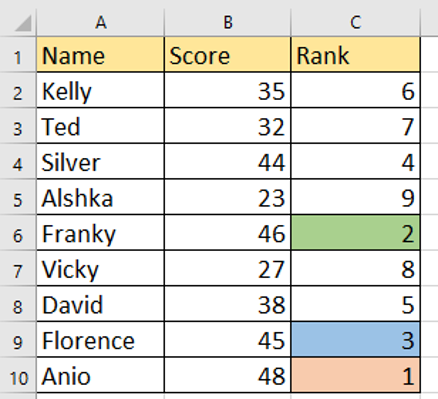
Assess the qualities/qualifications of a potential consultant. Which consultants do prime professionals want to hire? Inquire into the consultant’s availability, experience with the consultant, financial qualifications, adequately insured, shared values and chemistry with compatible systems, and ability to reach an agreement, including terms and conditions such as the consultant’s dispute resolution method. An A/E prime professional should develop their own rating system, as they would when they decide to work with a potential client.
- Numeric scale (1 -10) rather than just low, medium, high
- Post-evaluation of consultant’s prior performance
- Gather input from staff members of past experiences with proposed consultant
- Importance – use rank # only once
An A/E prime professional should understand that their consultant is engaged to further the interests of their client—the project owner. The AIA 1909 Principles of Professional Practice & Code of Ethics, Section 3, states:

Before payment of consultant’s first invoice, an A/E prime professional should obtain copy of consultant’s certificate of insurance. This is the leverage that the prime professional needs to ensure that the consultant’s insurance is in effect for the project, when the consultant’s insurance policies renew in order to track that their policies are renewed, and what limits and types insurance are provided.
An A/E prime professional could go further, and check out consultant’s website, and the applicable ethical opinions of the National Society Professional Engineers’ Board of Ethical Review (BER). Although a consultant’s website may not reveal all of their project history, the BER has numerous advisory opinions that could shed light when engaging a consultant for a particular service.
And an A/E prime professional could go even further, and ask the consultant’s “loss runs.” Loss runs are a design professional’s history of claims against their firm, generated by their professional liability insurance carrier. This is especially helpful, to know how many times the consultant has been involved in disputes, including litigation. In other words, is the consultant “dispute prone”?
Consultants should be given credit for their contributions to a project. The AIA 2020 Code of Ethics & Professional Conduct, Rule of Conduct 4.201, states:
- Members shall state scope of their responsibilities for which they are claiming credit (and give credit to consultant).
The NSPE 2019 Code of Ethics for Engineers, Canon 9, states that:
- Engineers shall give credit for engineering work to those to whom credit is due, and will recognize the proprietary interests of others.
- Engineers shall, wherever possible, name the person or persons who may be individually responsible for designs, inventions, writings or other accomplishments.
Should an A/E prime professional firm form a “joint venture” with another design professional, instead of engaging them as a consultant? Generally, not a good idea, unless forming strategic alliance when appropriate for a particular project/client. Joint venture partners may be considered “jointly & severally liable” for acts of entire alliance, but professional liability insurance will not cover the joint venture itself—each design professional’s own insurance would be come into play.
Ownership of Documents and Copyrights. Should a prime professional own the consultants’ documents? If prime agreement requires giving up the A/E’s documents, the A/E’s consultant would have to do the same. The same holds true for copyrights.
Communications between an A/E prime professional with its consultant are critical. There should be established clear lines of communications, not only during design, but especially with construction administration including submittals and site visits, where the “rubber meets the road.”
- Coordinate submittal procedures between prime professional-consultant
- Consistent shop drawings between prime professional-consultant
- Site visits with both prime professional and consultant
- Changes during construction, which certainly occurs on almost every project
Payment provisions between an A/E prime professional and its consultants should be negotiated and clearly stated. The issue has to be decided—should a consultant be paid even if the prime professional has not. When the prime professional is not paid, consultants inevitably risk non-payment. Consultants’ protection—question the prime professional about the projects owner’s solvency and business practices, and unfortunately has to rely on prime professional’s efforts to collect the project’s fees.
For an agreement that a consultant gets paid only if the A/E prime professional gets paid to be enforceable, the prime professional must establish the intent to shift the risk of non-payment. The magic words “condition precedent” must be used, such as:
“It is specifically understood and agreed that the payment to Consultant is dependent, as a condition precedent, upon the Prime Professional’s receipt of payment from Owner. Consultant acknowledges the risk of non-payment to the Prime Professional by Owner may result in non-payment.”
The AIA document C401 (2017), Standard Form of Agreement Between Architect & Consultant, § 11.6.2 states that:
- Payments to the Consultant shall be made promptly after the Architect is paid by the Owner under the Prime Agreement. The Architect shall exert reasonable and diligent efforts to collect prompt payment from the Owner.
- The Architect shall pay the Consultant in proportion to the amounts received from the Owner which are attributable to the Consultant's services rendered and Reimbursable Expenses incurred.
IN CONCLUSION
It seems every publication and professional educational presentation concludes with a discussion on dispute resolution. The C401 § 8.1.1 states that:
- Any claim, dispute or other matter in question arising out of or related to this Agreement shall be subject to the same dispute resolution provisions as set forth in the Prime Agreement,
- except that if the claim, dispute or other matter in question is unrelated to a dispute between the Architect and Owner, or if the Consultant is legally precluded from being a party to the dispute resolution procedures set forth in the Prime Agreement,
- then claims, disputes or other matters in question shall be resolved in accordance with the procedures set forth in (this agreement).
About the Author
Eric O. Pempus, FAIA, Esq., NCARB has been a risk manager for more than 17 years with experience in architecture, law and professional liability insurance, and a unique and well-rounded background in the construction industry. He has 25 years of experience in the practice of architecture, and as an adjunct professor teaching professional practice courses at the undergraduate and graduate levels for the last 35 years. As a Fellow of the American Institute of Architects and AIA National Ethics Council 2021 Chair, he has demonstrated his impact on architectural profession. He has presented numerous loss prevention and continuing educational programs to design professionals and architectural students in various venues across the United States and Canada.
The above comments are based upon DesignPro Insurance Group’s experience with Risk Management Loss Prevention activities, and should not be construed to represent a determination of legal issues, but are offered for general guidance with respect to your own risk management and loss prevention. The above comments do not replace your need for you to rely on your counsel for advice and a legal review, since every project and circumstance differs from every other set of facts.
Disclaimer: The viewpoints expressed in this article are those of the author(s) and are not necessarily approved by, reflective of or edited by other individual, group, or institution. This article is an expression by the author(s) to generate discussion and interest in this topic.